
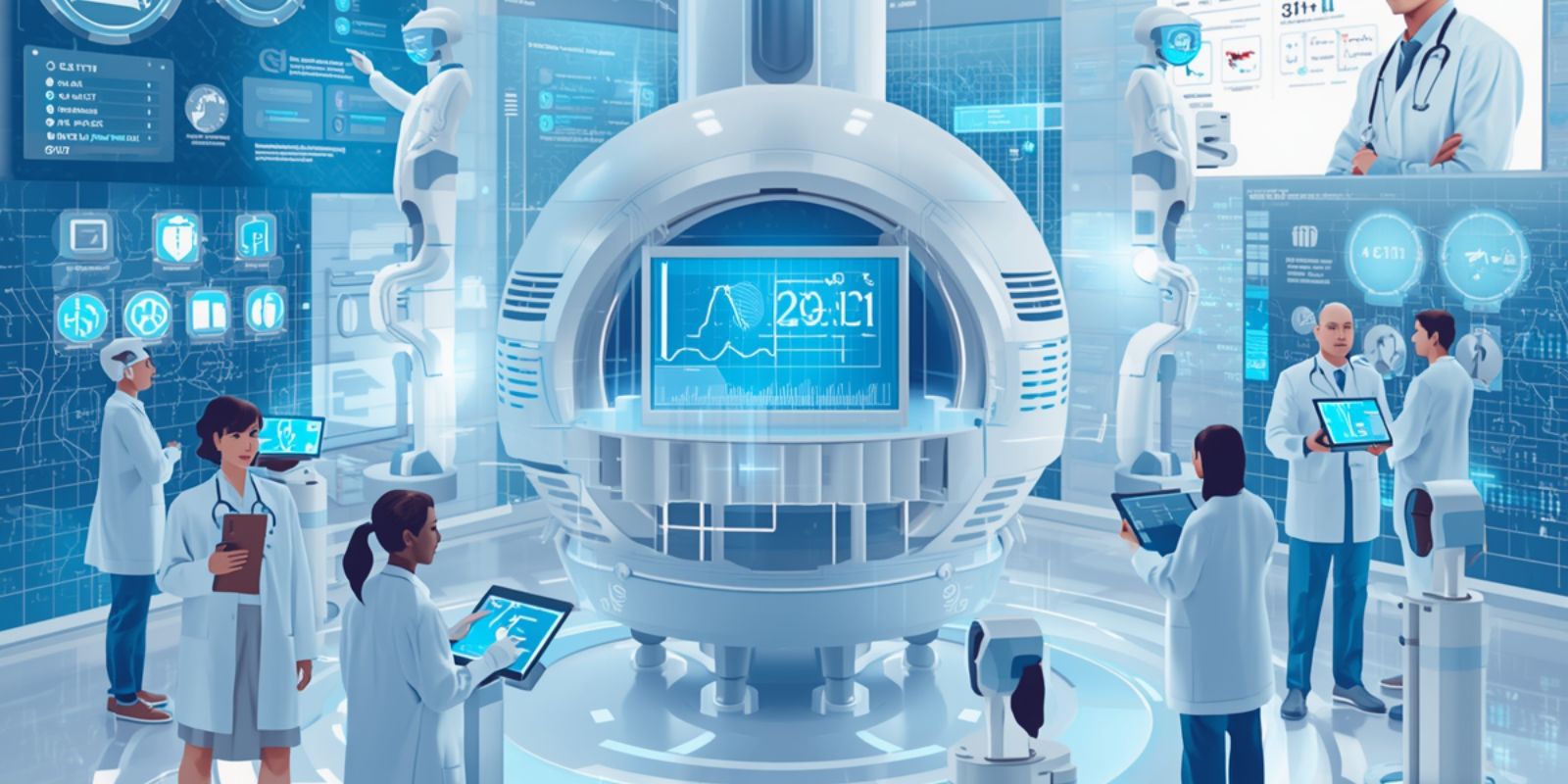
Future Of Healthcare Diagnostic Testing
Introduction
Healthcare diagnostic testing is undergoing a remarkable transformation, driven by technological advancements, evolving patient expectations, and the increasing need for precision medicine. Traditionally, diagnostic testing relied heavily on centralized laboratories, manual procedures, and longer turnaround times. However, the future promises faster, smarter, and more personalized diagnostic solutions that can significantly improve patient outcomes.
As healthcare systems worldwide shift toward preventive and value-based care, diagnostic testing is becoming a cornerstone of early detection, disease monitoring, and treatment optimization. Emerging innovations such as artificial intelligence (AI), molecular diagnostics, and point-of-care testing are reshaping the way diseases are identified and managed.
This article explores the future of healthcare diagnostic testing, highlighting key trends, technologies, benefits, and challenges that will define the next era of medical diagnostics.
1. Rise of Artificial Intelligence in Diagnostics
Artificial intelligence is playing a pivotal role in transforming diagnostic testing. AI-powered tools can analyze vast amounts of data, identify patterns, and assist healthcare professionals in making faster and more accurate diagnoses.
Machine learning algorithms are increasingly used in pathology, radiology, and laboratory medicine. These systems can detect abnormalities in medical images, interpret lab results, and even predict disease risks before symptoms appear.
In the future, AI will not replace healthcare professionals but will act as a powerful support system, enhancing decision-making and reducing human error.
2. Growth of Point-of-Care Testing (POCT)
Point-of-care testing is revolutionizing diagnostics by bringing testing closer to the patient. Instead of waiting for lab results, patients can receive immediate results at clinics, pharmacies, or even at home.
POCT devices are becoming more compact, affordable, and user-friendly. These tests are particularly useful in emergency situations, rural areas, and resource-limited settings where access to centralized laboratories is limited.
The future will see widespread adoption of portable diagnostic devices capable of detecting multiple conditions with high accuracy in real time.
3. Advancements in Molecular Diagnostics
Molecular diagnostics is one of the fastest-growing areas in healthcare testing. It involves analyzing DNA, RNA, and proteins to detect diseases at a genetic level.
Technologies such as PCR (Polymerase Chain Reaction) and next-generation sequencing (NGS) are enabling early detection of diseases like cancer, genetic disorders, and infectious diseases.
In the future, molecular diagnostics will become more accessible and cost-effective, allowing for personalized treatment plans based on an individual’s genetic profile.
4. Personalized and Precision Medicine
The future of diagnostic testing is closely linked to personalized medicine. Instead of a one-size-fits-all approach, healthcare providers will tailor treatments based on a patient’s unique genetic makeup, lifestyle, and medical history.
Diagnostic tests will play a critical role in identifying the most effective therapies for individual patients. For example, cancer treatments can be customized based on specific genetic mutations found through advanced testing.
This approach not only improves treatment outcomes but also reduces unnecessary side effects and healthcare costs.
5. Integration of Digital Health Technologies
Digital transformation is reshaping the diagnostic landscape. Electronic health records (EHRs), wearable devices, and mobile health apps are generating vast amounts of health data.
In the future, diagnostic testing will be seamlessly integrated with digital health platforms. Patients will be able to track their health metrics in real time, share data with healthcare providers, and receive instant insights.
Wearable devices, such as smartwatches and biosensors, will continuously monitor vital signs and detect early signs of disease, enabling proactive healthcare management.
6. Automation and Robotics in Laboratories
Automation is enhancing efficiency and accuracy in diagnostic laboratories. Automated systems can handle large volumes of samples, perform repetitive tasks, and reduce human intervention.
Robotic technologies are being used for sample processing, analysis, and reporting. This not only speeds up testing but also minimizes errors and improves consistency.
In the future, fully automated “smart labs” will become the norm, capable of delivering high-quality results with minimal manual effort.
7. Expansion of Home-Based Testing
Home-based diagnostic testing is gaining popularity, especially after the global pandemic highlighted the importance of accessible healthcare.
Self-testing kits for conditions such as diabetes, cholesterol, infections, and even genetic screening are becoming widely available. These kits empower patients to take control of their health and reduce the need for frequent hospital visits.
The future will bring more advanced home testing solutions with higher accuracy and connectivity to healthcare providers for real-time monitoring and guidance.
8. Big Data and Predictive Analytics
The integration of big data and analytics is transforming diagnostic testing from reactive to predictive. By analyzing large datasets, healthcare systems can identify trends, predict disease outbreaks, and assess individual risk factors.
Predictive analytics will enable early intervention, reducing the burden of chronic diseases and improving population health outcomes.
In the future, data-driven diagnostics will play a key role in preventive healthcare strategies.
9. Improved Accessibility and Affordability
One of the major goals of future diagnostic testing is to make healthcare more accessible and affordable. Innovations in technology are reducing the cost of tests and making them available to a broader population.
Telemedicine and mobile diagnostic units are helping bridge the gap between urban and rural healthcare services.
Governments and healthcare organizations are also investing in infrastructure and policies to ensure that advanced diagnostic services reach underserved communities.
10. Challenges and Ethical Considerations
Despite the promising future, diagnostic testing faces several challenges. Data privacy and security are major concerns, especially with the increasing use of digital health technologies.
There are also issues related to regulatory approvals, standardization, and quality control. Ensuring the accuracy and reliability of new diagnostic tools is crucial.
Ethical considerations, such as genetic data usage and patient consent, must be addressed to build trust and ensure responsible implementation of advanced diagnostics.
Conclusion
The future of healthcare diagnostic testing is dynamic and full of potential. With advancements in AI, molecular diagnostics, digital health, and automation, diagnostic services are becoming faster, more accurate, and more patient-centric.
These innovations are not only improving disease detection and treatment but also paving the way for preventive and personalized healthcare. As technology continues to evolve, diagnostic testing will play an even more critical role in shaping the future of global healthcare.
However, to fully realize these benefits, it is essential to address challenges related to accessibility, affordability, and ethical considerations. By doing so, the healthcare industry can ensure that advanced diagnostic solutions are available to everyone, ultimately leading to better health outcomes and improved quality of life.