
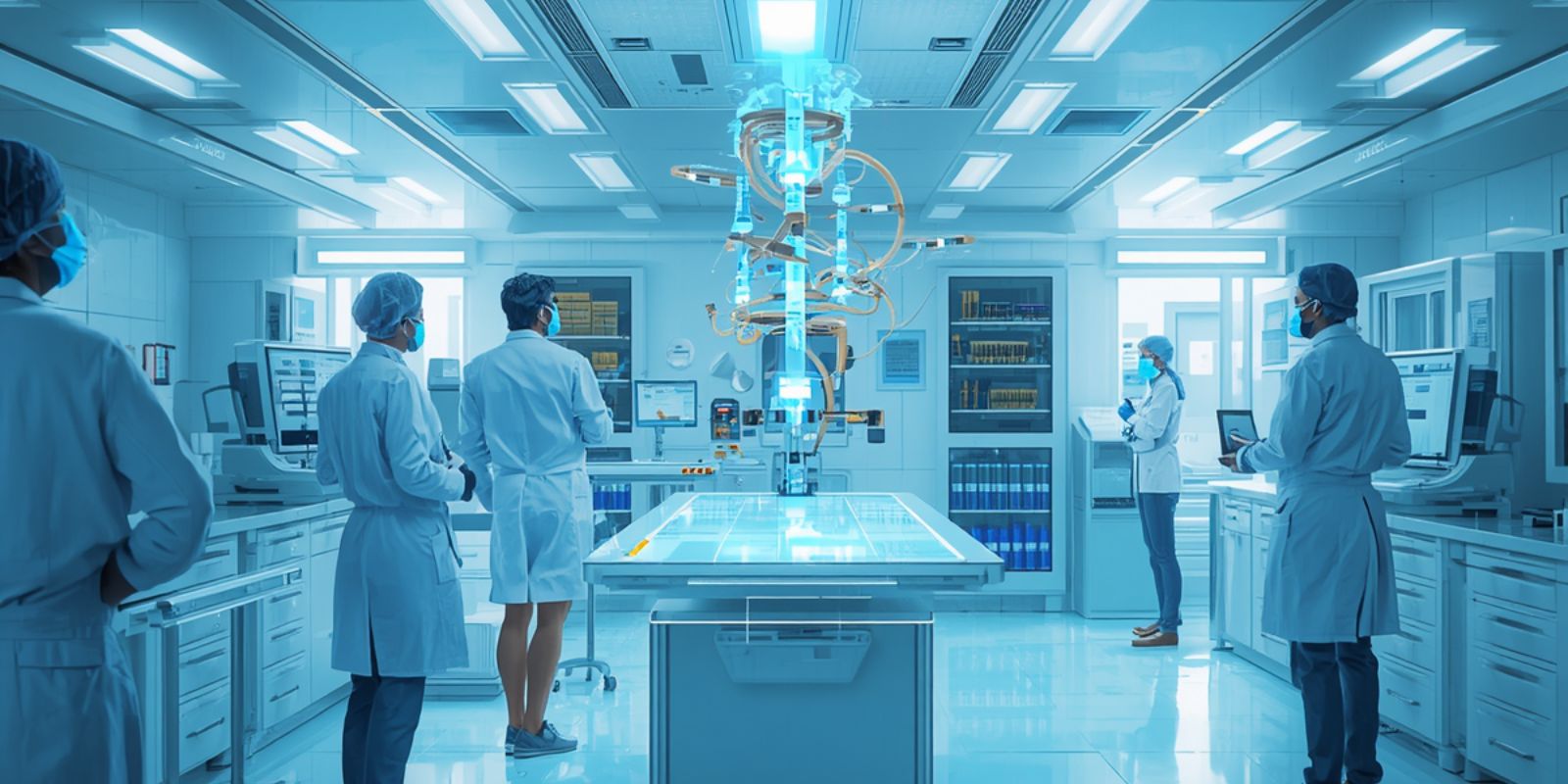
Digital Labs Improving Healthcare Testing Efficiency
The healthcare industry is undergoing a significant transformation, driven by the integration of digital technologies into laboratory systems. Digital labs are revolutionizing healthcare testing by enhancing efficiency, accuracy, speed, and accessibility. These advanced laboratories combine automation, data analytics, artificial intelligence, and cloud computing to streamline diagnostic processes and improve patient outcomes.
In today’s fast-paced healthcare environment, the demand for quick and reliable diagnostic results has never been higher. Traditional laboratory systems, while effective, often face challenges such as manual errors, longer turnaround times, and limited scalability. Digital labs address these challenges by creating a more efficient, connected, and intelligent testing ecosystem.
The Rise of Digital Labs in Healthcare
Digital labs represent the convergence of laboratory science and digital innovation. They utilize cutting-edge technologies such as laboratory information management systems (LIMS), automation tools, and data integration platforms to optimize workflows.
These labs are designed to handle large volumes of tests with minimal human intervention. Automated systems manage sample collection, processing, analysis, and reporting, reducing the need for manual handling and significantly lowering the risk of errors.
The rise of digital labs has been accelerated by global healthcare challenges, including pandemics and the increasing prevalence of chronic diseases. These factors have highlighted the need for faster, more accurate diagnostic capabilities.
Enhancing Efficiency Through Automation
One of the primary advantages of digital labs is automation. Automated systems streamline repetitive tasks such as sample sorting, labeling, and testing. This reduces the workload on laboratory staff and allows them to focus on more complex analytical tasks.
Automation also improves consistency in testing procedures. Machines follow standardized protocols, ensuring that every test is conducted with the same level of precision. This leads to more reliable results and reduces variability.
Additionally, automation speeds up the entire testing process. What once took hours or even days can now be completed in a fraction of the time. Faster results enable healthcare providers to make timely decisions, which is critical for effective patient care.
Integration of Advanced Data Analytics
Digital labs leverage data analytics to transform raw laboratory data into meaningful insights. Advanced analytics tools can identify patterns, trends, and anomalies in test results, helping clinicians make more informed decisions.
For instance, predictive analytics can be used to detect early signs of diseases, allowing for proactive treatment. This not only improves patient outcomes but also reduces healthcare costs by preventing the progression of diseases.
Data analytics also enhances operational efficiency within labs. By analyzing workflow data, labs can identify bottlenecks and optimize processes for better performance.
Improved Accuracy and Reduced Errors
Accuracy is a critical aspect of healthcare testing. Even minor errors can have serious consequences for patient diagnosis and treatment. Digital labs significantly reduce the risk of errors through automation and digital tracking systems.
Barcoding and RFID technologies ensure accurate sample identification and tracking throughout the testing process. This eliminates the possibility of sample mix-ups and ensures that results are correctly matched to patients.
Digital systems also minimize human errors in data entry and reporting. Automated data capture and electronic reporting ensure that information is recorded accurately and consistently.
Faster Turnaround Times
In healthcare, time is often a crucial factor. Delays in diagnostic results can lead to delayed treatment and potentially worsen patient conditions. Digital labs address this issue by drastically reducing turnaround times.
Real-time data processing and automated workflows enable labs to deliver results quickly. In some cases, test results can be generated and shared with healthcare providers within minutes.
Faster turnaround times are particularly important in emergency situations and critical care, where timely decisions can save lives.
Seamless Connectivity and Data Sharing
Digital labs are highly interconnected, allowing seamless communication between different healthcare systems. Test results can be easily shared with doctors, hospitals, and patients through digital platforms.
Cloud-based systems enable remote access to laboratory data, making it easier for healthcare providers to review results and collaborate on patient care. This is especially beneficial in telemedicine and remote healthcare settings.
Interoperability between systems ensures that data flows smoothly across different platforms, reducing duplication and improving efficiency.
Cost Efficiency and Resource Optimization
Digital labs help reduce operational costs by optimizing resource utilization. Automation reduces the need for manual labor, while efficient workflows minimize waste and improve productivity.
Digital systems also reduce the need for physical storage of records, as data is stored electronically. This not only saves space but also makes data retrieval faster and more convenient.
Moreover, predictive maintenance of laboratory equipment ensures that machines are serviced before they fail, reducing downtime and repair costs.
Enhancing Patient Experience
Digital labs play a crucial role in improving the overall patient experience. Faster and more accurate test results lead to quicker diagnoses and treatment plans.
Patients can access their test results online through secure portals, eliminating the need for physical visits to the lab. This convenience is particularly beneficial for individuals with mobility issues or those living in remote areas.
Additionally, digital labs enable personalized healthcare by providing detailed insights into a patient’s health. This allows for tailored treatment plans that address individual needs.
Supporting Research and Innovation
Digital labs are not only improving routine diagnostics but also driving medical research and innovation. The vast amount of data generated by digital labs can be used for research purposes, leading to new discoveries and advancements in healthcare.
Researchers can analyze large datasets to identify trends and develop new diagnostic methods and treatments. This accelerates the pace of medical innovation and contributes to better healthcare outcomes.
Challenges in Implementing Digital Labs
Despite their numerous benefits, digital labs face certain challenges. The initial cost of setting up digital infrastructure can be high, which may be a barrier for smaller healthcare facilities.
Data security and privacy are also major concerns. With the increasing use of digital systems, protecting sensitive patient information becomes crucial. Robust cybersecurity measures are essential to prevent data breaches.
Additionally, there is a need for skilled professionals who can manage and operate digital lab systems. Training and upskilling of laboratory staff are necessary to fully leverage the benefits of digital technologies.
The Future of Digital Labs
The future of digital labs looks promising, with continuous advancements in technology. Artificial intelligence and machine learning are expected to play an even bigger role in laboratory diagnostics.
AI-powered systems can analyze complex data sets with high accuracy, providing deeper insights into patient health. These systems can also assist in diagnosing diseases and recommending treatment options.
The integration of Internet of Things (IoT) devices will further enhance connectivity and data sharing in digital labs. Smart devices can monitor lab conditions and equipment performance in real time.
As technology continues to evolve, digital labs will become more efficient, accessible, and integral to healthcare systems worldwide.
Conclusion
Digital labs are transforming healthcare testing by improving efficiency, accuracy, and speed. Through automation, data analytics, and seamless connectivity, these labs are addressing the limitations of traditional laboratory systems.
They enable faster diagnoses, better patient outcomes, and more efficient healthcare delivery. While challenges remain, the benefits of digital labs far outweigh the drawbacks.
As the healthcare industry continues to embrace digital transformation, digital labs will play a critical role in shaping the future of diagnostics and patient care. Their ability to deliver precise and timely results makes them an essential component of modern healthcare systems.