
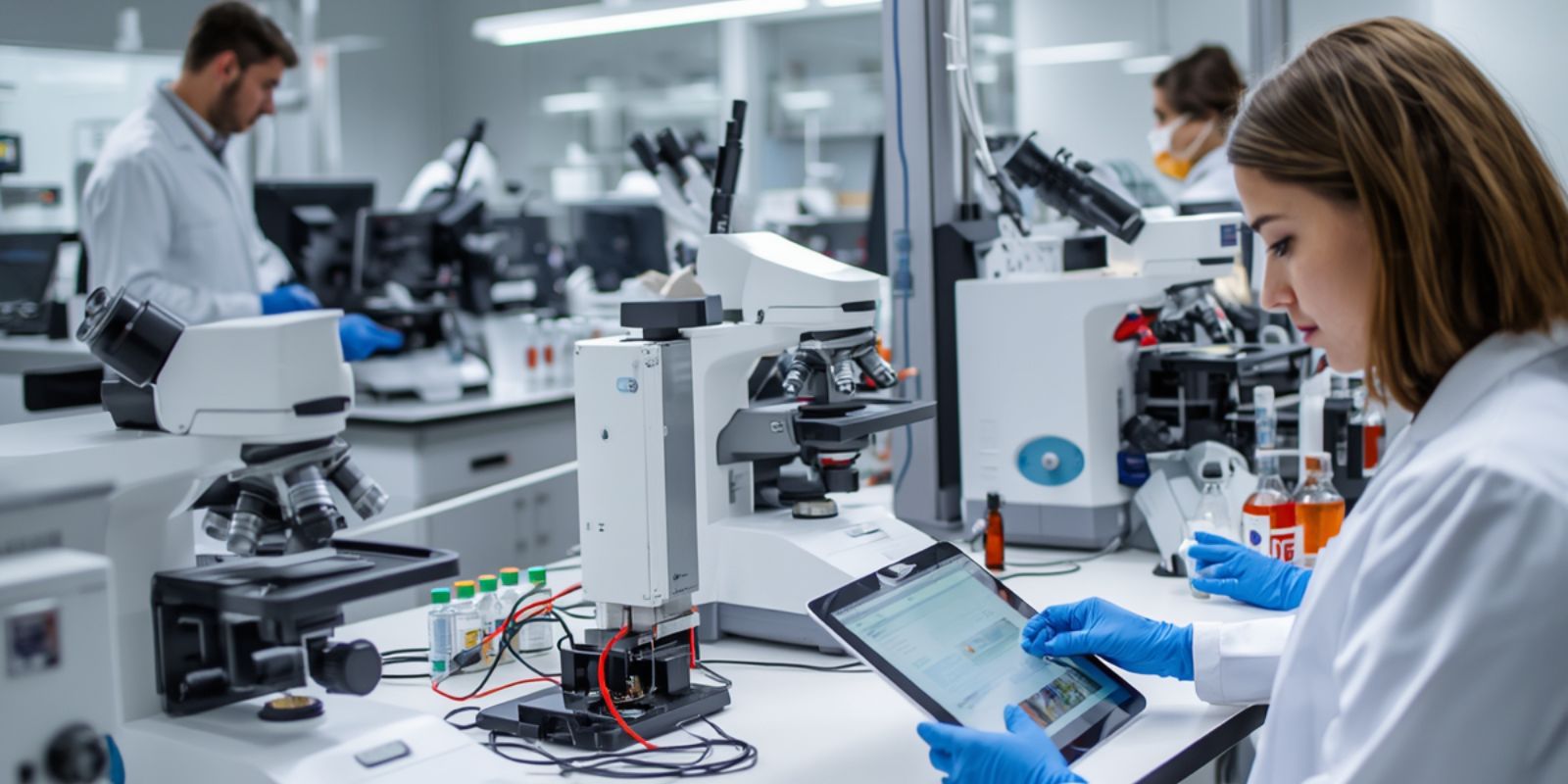
Innovations in Medical Laboratory Technology
Medical laboratory technology has undergone a remarkable transformation over the past few decades, playing a crucial role in modern healthcare. From manual testing methods to highly automated and AI-driven systems, innovations in this field have significantly improved diagnostic accuracy, speed, and efficiency. These advancements not only support early disease detection but also enable personalized treatment plans and better patient outcomes.
The Evolution of Laboratory Technology
Traditionally, laboratory testing relied heavily on manual processes, which were time-consuming and prone to human error. Technicians had to perform repetitive tasks such as pipetting, sample preparation, and analysis. However, with the introduction of automation and digital tools, laboratories have evolved into highly sophisticated environments.
Today, advanced instruments and integrated systems have replaced manual workflows, allowing laboratories to handle a higher volume of tests with greater precision. This shift has been vital in meeting the growing demand for diagnostic services, especially in densely populated countries like India.
Automation in Laboratory Testing
One of the most significant innovations in medical laboratory technology is automation. Automated analyzers and robotic systems can perform multiple tests simultaneously with minimal human intervention. These systems reduce errors, improve consistency, and enhance productivity.
Automation also enables faster turnaround times, which is critical in emergency situations. For example, automated hematology analyzers can deliver complete blood count (CBC) results within minutes. This rapid processing helps clinicians make timely decisions and initiate treatment promptly.
Moreover, automation minimizes the risk of contamination and ensures standardized testing procedures, which are essential for maintaining quality in diagnostic laboratories.
Artificial Intelligence and Machine Learning
Artificial Intelligence (AI) and Machine Learning (ML) are revolutionizing laboratory diagnostics. These technologies can analyze large datasets, identify patterns, and provide predictive insights. AI-powered systems are particularly useful in areas such as pathology, radiology, and microbiology.
For instance, AI algorithms can assist in detecting abnormalities in blood samples or identifying cancerous cells with high accuracy. This not only supports laboratory professionals but also reduces the chances of misdiagnosis.
Organizations like World Health Organization emphasize the importance of integrating AI into healthcare systems to improve diagnostic capabilities and patient care worldwide.
Molecular Diagnostics and Genomics
Molecular diagnostics is another groundbreaking innovation that has transformed laboratory medicine. Techniques such as Polymerase Chain Reaction (PCR) and Next-Generation Sequencing (NGS) allow for the detection of diseases at the genetic level.
These technologies are widely used in diagnosing infectious diseases, genetic disorders, and cancers. For example, PCR testing became globally recognized during the COVID-19 pandemic for its ability to detect viral genetic material accurately.
Genomic testing also enables personalized medicine, where treatments are tailored based on an individual’s genetic makeup. This approach increases the effectiveness of therapies and reduces adverse effects.
Point-of-Care Testing (POCT)
Point-of-Care Testing (POCT) is a game-changer in medical diagnostics. It allows tests to be conducted near the patient, such as in clinics, ambulances, or even at home. This eliminates the need for samples to be sent to centralized laboratories, significantly reducing waiting times.
Devices like glucometers and rapid diagnostic kits are common examples of POCT. These tools are especially beneficial in rural or remote areas where access to full-scale laboratories may be limited.
POCT enhances patient convenience and enables immediate clinical decisions, which can be life-saving in critical situations.
Digital Transformation and Laboratory Information Systems
The digitalization of laboratories has led to the development of Laboratory Information Systems (LIS). These systems manage patient data, track samples, and streamline workflows. Integration with hospital systems ensures seamless communication between healthcare providers.
Digital tools also enable remote access to reports, allowing doctors and patients to view results online. This improves transparency and efficiency in healthcare delivery.
Additionally, data analytics helps laboratories monitor performance, identify trends, and maintain quality standards. Digital transformation has thus become a cornerstone of modern laboratory operations.
Advanced Imaging and Diagnostic Tools
Innovations in imaging technologies have also impacted laboratory diagnostics. High-resolution microscopes, digital pathology systems, and automated imaging tools provide detailed insights into biological samples.
Digital pathology, for example, allows slides to be scanned and analyzed electronically. This enables remote consultations and collaboration among experts across different locations.
These advanced tools enhance diagnostic accuracy and support research and education in medical science.
Robotics and Lab-on-a-Chip Technology
Robotics is increasingly being used in laboratories to perform repetitive and complex tasks. Robotic systems can handle sample sorting, testing, and even data analysis, reducing the workload on laboratory staff.
Lab-on-a-chip technology is another exciting innovation. It integrates multiple laboratory functions onto a single microchip, enabling rapid testing with minimal sample volumes. This technology is compact, cost-effective, and highly efficient.
Lab-on-a-chip devices are particularly useful for rapid diagnostics and field testing, making them valuable in emergency and outbreak situations.
Quality Control and Standardization
With technological advancements, maintaining quality and standardization has become more efficient. Automated systems ensure consistent testing procedures, while digital monitoring helps track performance and detect errors.
Accreditation bodies and global organizations set strict guidelines to ensure laboratory quality. Compliance with these standards enhances the reliability of diagnostic results and builds trust among patients and healthcare providers.
Challenges and Future Prospects
Despite the numerous benefits, the adoption of advanced laboratory technologies comes with challenges. High costs, the need for skilled professionals, and data security concerns are some of the key issues.
However, continuous innovation and investment are expected to overcome these barriers. Governments and private sectors are increasingly focusing on strengthening healthcare infrastructure and promoting technological advancements.
The future of medical laboratory technology looks promising, with emerging trends such as:
- Integration of AI with big data
- Development of portable diagnostic devices
- Expansion of telemedicine and remote diagnostics
- Increased use of personalized medicine
These advancements will further enhance the efficiency and accessibility of healthcare services.
Conclusion
Innovations in medical laboratory technology have revolutionized the way diseases are diagnosed and managed. From automation and AI to molecular diagnostics and digital systems, these advancements have significantly improved accuracy, speed, and patient care.
As technology continues to evolve, laboratories will play an even more critical role in healthcare. Embracing these innovations is essential for delivering high-quality diagnostic services and ensuring better health outcomes for all.